Gangnam & Garosu-gil: Upscale Shopping, Cafés & K-Pop Culture
2026-03-13
Guide to Action
Overview
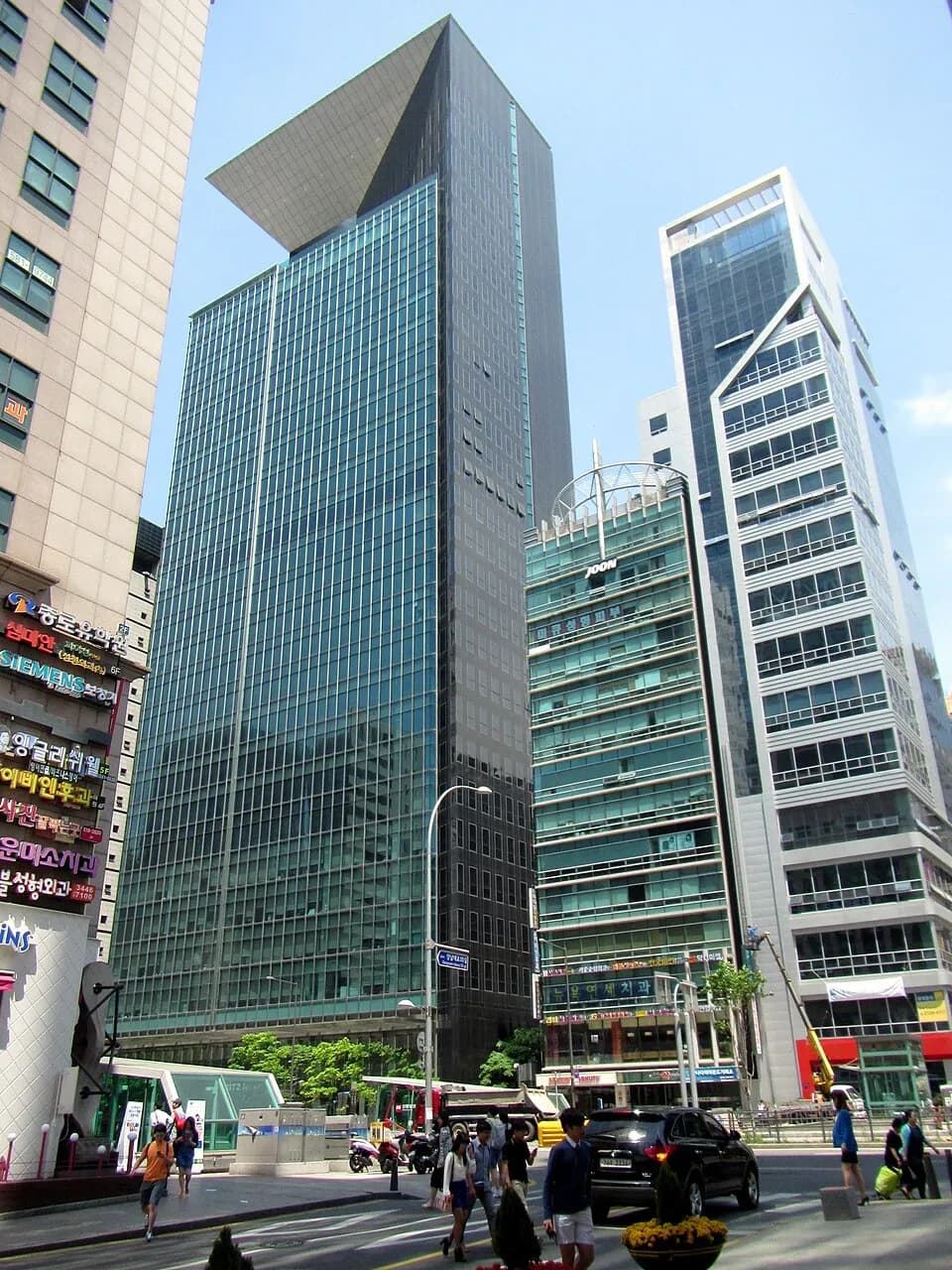
Gangnam literally means "south of the river" — the Han River — and everything about this district feels like a different Seoul. While the north side of the city preserves palaces, hanok villages, and centuries of dynastic history, Gangnam is where modern Korea flexes: gleaming skyscrapers, designer boutiques, K-pop entertainment headquarters, and some of the most expensive real estate in Asia.
The district shot to global fame in 2012 when Psy's "Gangnam Style" became the first YouTube video to hit one billion views, turning the name into a worldwide byword for Korean affluence and pop culture swagger. But Gangnam was already the beating heart of the Korean Wave. SM Entertainment, JYP Entertainment, and HYBE (home of BTS) all have offices in or near the district. Walk through Cheongdam-dong on any given afternoon and you might spot idols heading into recording studios.
Best for: K-pop fans, luxury shoppers, café culture lovers, and anyone who wants to see the polished, aspirational side of modern Seoul.
Seoul's sleek southern powerhouse — where K-pop empires, luxury malls, and cutting-edge cafés define the city's modern identity.
Getting There
Gangnam Station is one of the busiest subway stops in Seoul, served by Line 2 and the Sinbundang Line. The broader Gangnam area is well connected by multiple subway lines.
| From | Route | Time | Cost |
|---|---|---|---|
| Seoul Station | Subway Line 4 → transfer Line 2 at Sadang | ~25 min | ₩1,550 with T-money |
| Myeongdong | Subway Line 4 → transfer Line 2 at Sadang | ~30 min | ₩1,550 with T-money |
| Hongdae (Hongik Univ.) | Subway Line 2 direct | ~30 min | ₩1,550 with T-money |
| Incheon Airport | AREX to Seoul Station → Line 2 | ~80 min | Check current fare |
| Gimpo Airport | Subway Line 9 → transfer Line 2 | ~40 min | ₩1,550 with T-money |
The Gangnam area is large. Gangnam Station, Sinsa-dong (Garosu-gil), Apgujeong, and COEX are all separate subway stops 10–20 minutes apart on foot. Use the subway to hop between clusters rather than trying to walk the entire district in one go.
Gangnam Station Area
The blocks surrounding Gangnam Station form a dense commercial core of office towers, underground shopping arcades, and chain restaurants. It is not Seoul's prettiest neighborhood, but it is arguably its most energetic.
Gangnam Underground Shopping Center
Stretching beneath the main boulevard, this sprawling underground mall is a labyrinth of affordable fashion, accessories, cosmetics, and phone cases. Prices are significantly lower than the department stores above ground, and bargaining is acceptable at many stalls. It connects directly to the subway station, making it easy to browse on a rainy day.
Cosmetic Surgery Street
The streets south of Gangnam Station — particularly around Apgujeong Rodeo and the area near Sinnonhyeon Station — are home to hundreds of plastic surgery and dermatology clinics. Billboards advertising procedures line the sidewalks, offering a surreal glimpse into an industry worth over $5 billion annually in South Korea. Even if you have no interest in the services, the visual landscape is striking.
Gangnam Style Statue
Located at the COEX complex (not at Gangnam Station, despite common assumption), the "Gangnam Style" statue features two oversized hands forming Psy's signature horse-riding dance pose. It makes for a fun photo op, and COEX itself is worth the visit.
The commercial nerve center of southern Seoul — underground malls, neon-lit streets, and relentless energy day and night.
Garosu-gil
Garosu-gil (가로수길, "tree-lined street") in Sinsa-dong is one of Seoul's most photogenic streets. A 700-meter boulevard flanked by mature ginkgo trees, it is lined with independent fashion boutiques, design studios, artisan bakeries, and Instagram-famous cafés stacked three or four stories high.
The neighborhood first gained attention in the early 2010s when local designers and small-batch coffee roasters set up shop, attracted by the relatively low rents and the beautiful tree canopy. Today, rents have soared and international brands have moved in, but the street retains a creative, walkable charm that sets it apart from the corporate feel of Gangnam Station.
What to look for:
- Seasonal foliage — The ginkgo trees turn brilliant gold in late October and early November, making Garosu-gil one of Seoul's best autumn strolls
- Multi-story cafés — Many buildings house different cafés on each floor, each with its own aesthetic. Climb to the rooftop for views over the treetops
- Korean designer boutiques — Labels like Ader Error, Gentle Monster (flagship nearby), and smaller independent brands that you will not find outside Korea
- Side alleys (Sero-su-gil) — The perpendicular alleys branching off the main street hide some of the best restaurants and quieter shops
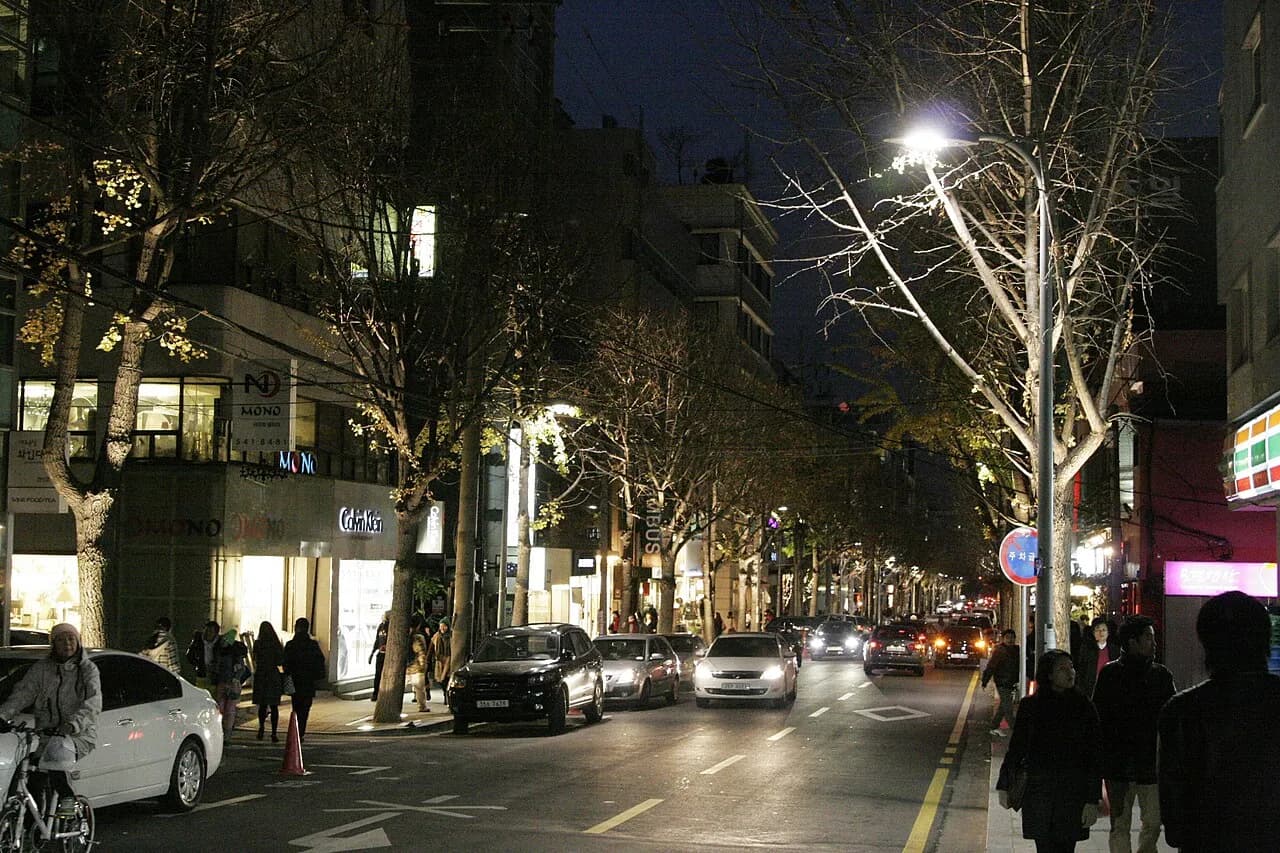
Seoul's tree-lined fashion and café street — ginkgo canopies, designer boutiques, and some of the city's most beautiful brunch spots.
Visit Garosu-gil on a weekday afternoon for a calmer experience. Weekends draw heavy foot traffic, especially in autumn. The side streets (Sero-su-gil) are always quieter and often more interesting.
Apgujeong & Cheongdam
If Gangnam Station is the district's commercial engine, Apgujeong and Cheongdam-dong are its luxury showroom. This is where Seoul's wealthiest residents shop, dine, and get spotted.
Cheongdam Fashion Street
Running along Apgujeong-ro, Cheongdam Fashion Street is Seoul's answer to Rodeo Drive. Flagship stores from Dior, Chanel, Louis Vuitton, Gucci, and Hermès occupy architect-designed buildings that are destinations in their own right. The Gentle Monster flagship (Haus Dosan) is a multi-story art installation disguised as a sunglasses store — even if you are not buying, the interior is worth exploring.
K-Star Road
Between Apgujeong Rodeo Station and Cheongdam Station, K-Star Road features a series of GangnamDol (Gangnam idol) bear statues representing different K-pop groups. The road passes by several entertainment company buildings, making it a pilgrimage route for K-pop fans. You might catch fan gatherings outside agencies or spot trainees heading to practice.
Apgujeong Rodeo Street
A hub of upscale dining, cocktail bars, and hair salons frequented by celebrities. The side streets are home to concept stores, art galleries, and some of Seoul's best fine-dining restaurants. The atmosphere is noticeably more refined and quieter than Gangnam Station, with a well-dressed local crowd.
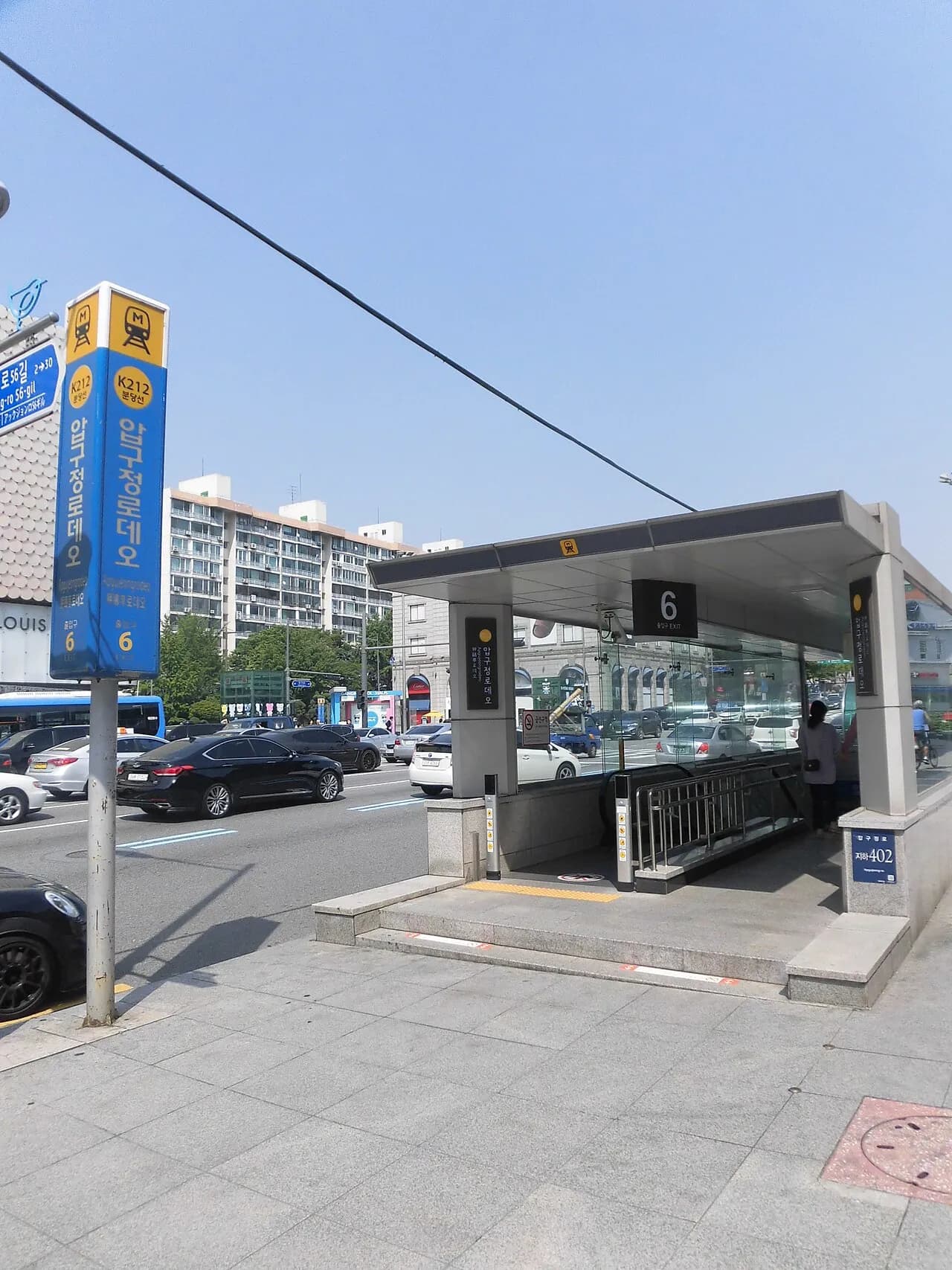
Seoul's luxury quarter — Cheongdam flagship stores, K-Star Road idol statues, and some of the city's finest dining.
COEX & Starfield
The COEX Mall in Samseong-dong is one of the largest underground shopping malls in the world, and its centerpiece — the Starfield Library — has become one of Seoul's most iconic modern landmarks.
Starfield Library
Two towering bookshelves reaching 13 meters high, holding over 50,000 books and magazines, set in an open atrium flooded with natural light. It is free to enter, free to browse, and open to everyone. The library has appeared in countless K-dramas and is one of the most photographed spots in Seoul. Arrive early in the morning for photos without crowds.
COEX Aquarium
One of Korea's largest aquariums, with over 40,000 marine creatures across 183 display tanks. The tunnel walkthrough and shark feeding sessions are popular with families. Allow 1.5–2 hours.
K-pop Photo Stops & Pop-Ups
Gangnam still has plenty for K-pop fans, but older guides often overstate the COEX Artium era. Today, the more reliable draws are K-Star Road, agency buildings in the wider Cheongdam area, fan-organized birthday cafes, and brand pop-ups that change throughout the year.
Bongeunsa Temple
Directly across from COEX, Bongeunsa is a 1,200-year-old Buddhist temple that provides a striking contrast to the surrounding glass towers. The temple offers templestay programs and free meditation sessions. The juxtaposition of ancient temple architecture against the COEX skyline is one of Gangnam's most memorable visuals.
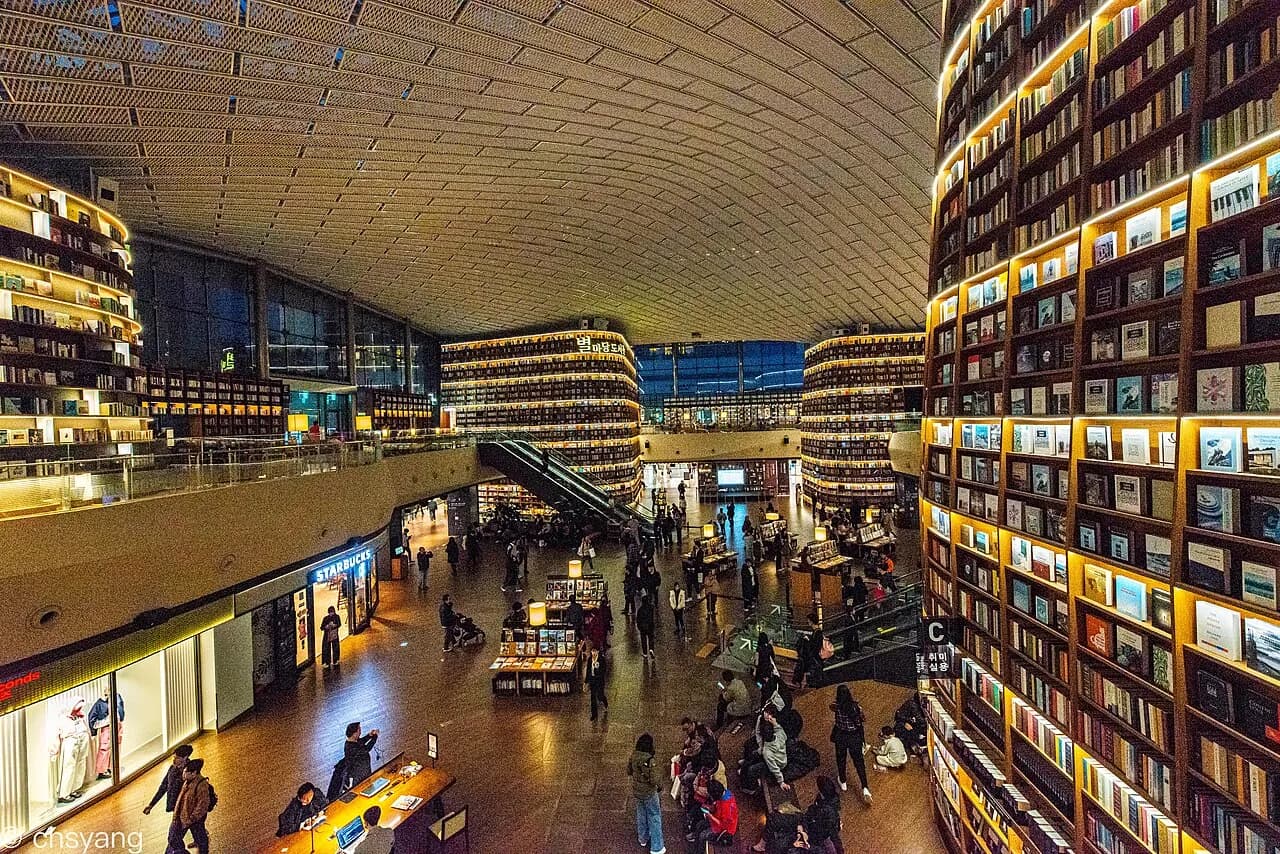
Seoul's mega-complex — the iconic Starfield Library, aquarium, rotating exhibitions and pop-ups, and one of the world's largest underground malls.
COEX Mall is enormous and easy to get lost in. Download the COEX Mall app or grab a map at the information desk before exploring. The mall connects directly to Samseong Station (Line 2) and Bongeunsa Station (Line 9).
Food & Cafés
Gangnam's dining scene spans the full spectrum — from Michelin-starred Korean fine dining to trendy brunch spots and late-night Korean BBQ joints.
Garosu-gil
- Café culture — Multi-story cafés are the main draw. Try rooftop terraces in spring and summer, window seats overlooking the ginkgo trees in autumn
- Brunch spots — Western-style brunch is hugely popular here, with avocado toast, eggs Benedict, and specialty lattes at premium prices
- Bakeries — Korean-style bakeries serving cream-filled croissants, sourdough, and elaborate pastries line the side streets
Apgujeong & Cheongdam
- Fine dining — Several Michelin-starred restaurants cluster in Cheongdam, offering modern Korean cuisine with seasonal tasting menus
- Celebrity restaurants — Many K-pop idols and actors run or frequent restaurants in this area
- Cocktail bars — Speakeasy-style cocktail bars hidden in basements and behind unmarked doors are a Cheongdam specialty
Gangnam Station Area
- Korean BBQ — Multiple 24-hour BBQ restaurants near the station for late-night grilling sessions
- Underground food courts — Budget-friendly Korean meals in the basement levels of department stores and shopping arcades
Seoul's café culture is intense, and Gangnam is its epicenter. Many cafés charge ₩7,000–₩12,000 for specialty drinks but offer stunning interiors and rooftop views. Consider it paying for the atmosphere as much as the coffee.
Where to Stay
Staying in Gangnam puts you close to COEX, Garosu-gil, and the nightlife scene. The area has excellent subway connections to Myeongdong, Hongdae, and the historic north side of the city.
Plan Your Stay
Add these spots to your trip, then find the best hotel area near all of them.
FAQ
More to explore nearby:
The Starfield Library alone is worth the trip — towering bookshelves, natural light, and one of Seoul's most iconic modern spaces.
Find the best hotel area for this guide
4 spots are already loaded so you can refine the hotel base below.
Plan Your Stay
Add these spots to your trip, then find the best hotel area near all of them.
More Guides
Myeongdong & Namdaemun: Seoul's Shopping & Street Food Paradise
K-beauty flagships, sizzling street food, and Korea's oldest market — your complete guide to Myeongdong and Namdaemun in central Seoul.
Gyeongbokgung Palace & Bukchon Hanok Village: The Complete Seoul Heritage Guide
A detailed guide to Seoul's most iconic royal palace and traditional hanok neighborhood — access, highlights, hanbok tips, nearby cafes, and where to stay.
Hongdae & Yeonnam-dong: Indie Culture, Cafes & Nightlife
Seoul's vibrant youth hub — street performances, indie shops, craft cafes, and Korea's best nightlife scene.
Insadong & Jongno: Traditional Tea Houses, Galleries & Cheonggyecheon
Seoul's cultural heartland — antique shops, traditional tea, Changdeokgung's Secret Garden, and the revitalized Cheonggyecheon Stream.
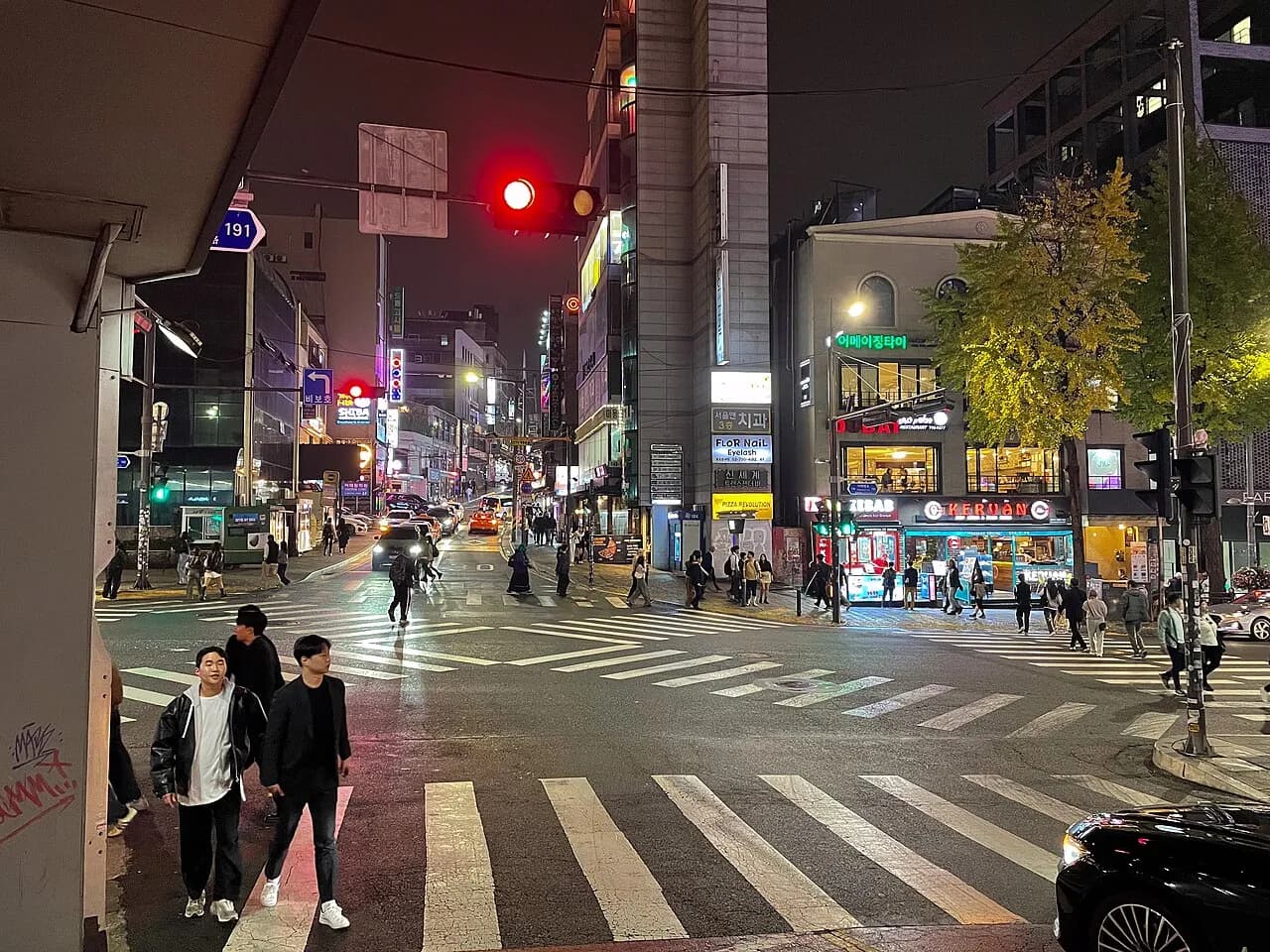
Itaewon & Hannam: Global Food, Rooftop Bars & Multicultural Seoul
Seoul's most international neighborhood — world cuisines, craft cocktails, Hannam's gallery scene, and Haebangchon's hilltop charm.
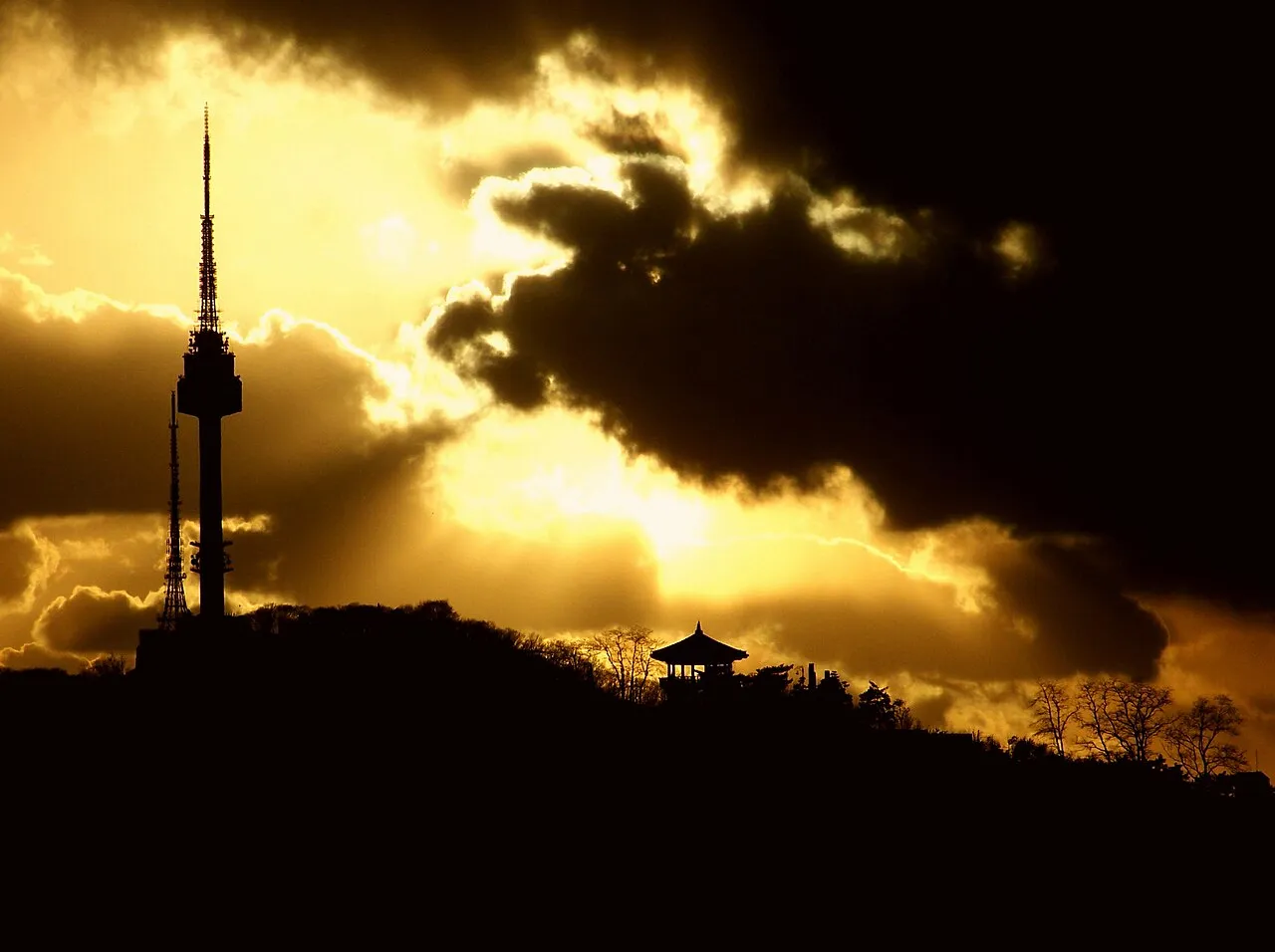
Seoul 1-Day, 2-Day & 3-Day Model Itinerary
Practical day-by-day plans for Seoul — palaces, markets, K-pop, nightlife, and hidden gems organized by duration.
Where to Stay in Seoul: Best Areas for Every Traveler (2026)
A data-driven guide to the best neighborhoods in Seoul for first-time visitors, nightlife lovers, culture seekers, and K-pop fans. Compare Myeongdong, Hongdae, Jongno, Gangnam, and more.
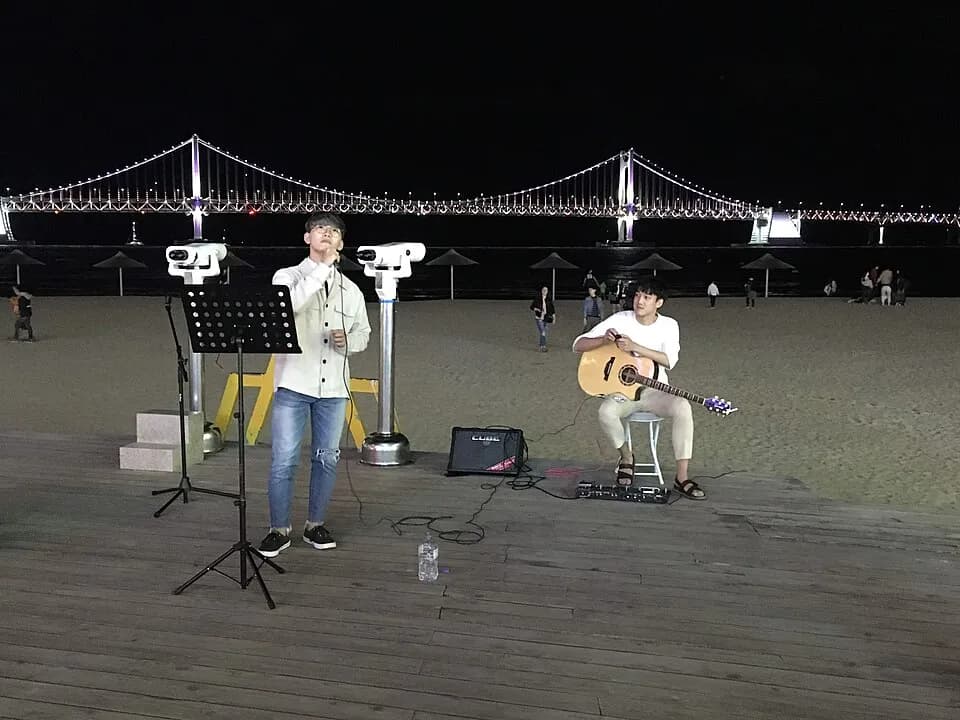
Busan 1-Day & 2-Day Model Itinerary
Day-by-day plans for Busan — beaches, temples, fish markets, colorful villages, and the best seafood in Korea.
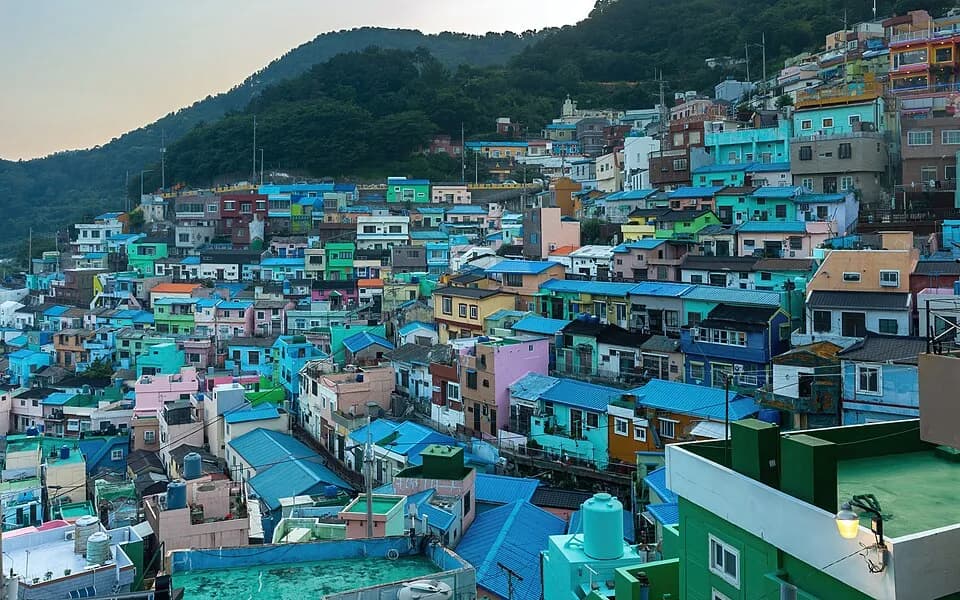
Gamcheon Culture Village, Nampo-dong & Jagalchi: Busan's Colorful Old Town
Busan's most photogenic hillside village, Korea's largest fish market, and the vibrant original downtown — art, seafood, and street food in one walk.
Haedong Yonggungsa & Taejongdae: Busan's Oceanside Temples & Cliffs
A seaside temple perched on ocean cliffs, Busan's dramatic southern peninsula, and peaceful Songjeong Beach — nature at its finest.
Haeundae & Gwangalli Beach: Sun, Seafood & Ocean Views
Korea's most famous beaches — Haeundae's white sand, Gwangalli's bridge night views, Dongbaek Island trail, and the freshest seafood in Busan.
Where to Stay in Busan: Best Areas for Every Traveler (2026)
A data-driven guide to the best neighborhoods in Busan for first-time visitors, beach lovers, foodies, and budget travelers. Compare Haeundae, Seomyeon, Nampo-dong, and Gwangalli.
Information such as prices, hours, and schedules may have changed. Please verify details on official websites before your visit.